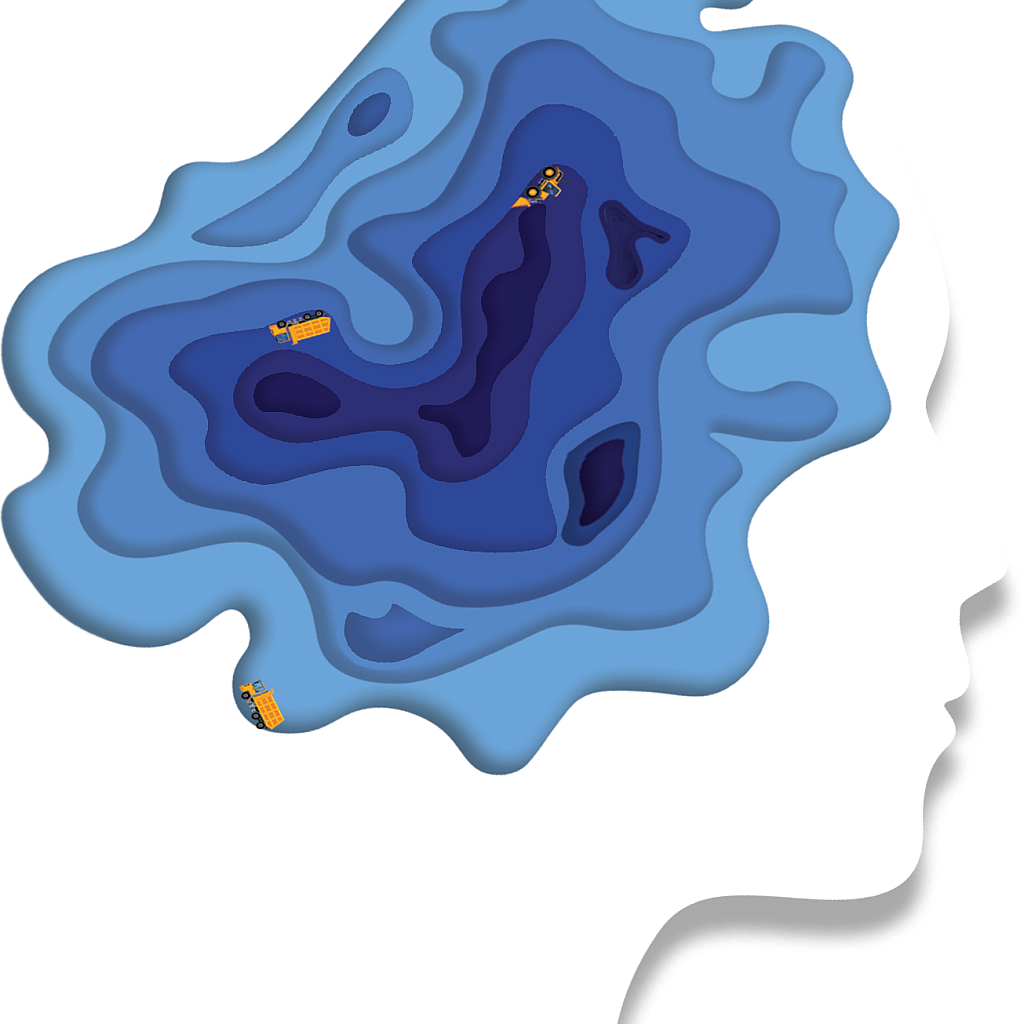
At 4:17 a.m. on an ordinary weekday, long before the first invoice is printed or a weighbridge ticket changes hands, the local quarry is already awake.
While the surrounding region sleeps, the darkness at the site has not yet surrendered to daylight. The silhouettes of excavators stand motionless against the horizon—resembling dormant, steel prehistoric creatures resting before another day of heavy labour. Their arms, coated in the fine stone dust of countless shifts, point toward the earth they will soon disturb.
The air carries a peculiar stillness, though a quarry is never truly silent. In the distance, a diesel engine coughs to life, followed by the sharp hiss of an air compressor. A lone security guard walks the perimeter, his flashlight beam briefly sweeping over conveyor belts, aggregate stockpiles, and parked tipper trucks waiting patiently for dawn.
From Silence to Symphony
Within the hour, this quiet landscape transforms into a carefully orchestrated industrial ecosystem.
The day shift begins with drivers arriving, steaming cups of tea balanced on their dashboards. Dispatch supervisors immediately begin reviewing the day's orders. Wheel loaders move with practiced precision between stockpiles, and the crushers awaken with their familiar, mechanical roar. In the control rooms, weighbridge operators take their seats before computer monitors, preparing to process hundreds of vehicle movements before the sun sets.
To a passing observer, the operation might appear entirely repetitive, routine, and predictable. However, beneath the surface of this daily grind lies an extraordinary level of logistical and financial complexity.
The Data Behind the Stone
Industry experts note that every truck entering the premises carries much more than stone—it carries critical data. Each load generates a cascade of logistical questions that must be answered in real-time:
- Load Specifications: How much material was loaded, and which customer placed the order?
- Operational Tracking: Which machine performed the loading, and which operator approved the dispatch?
- Logistics & Compliance: Which route will the vehicle follow, and did it leave with the exact recorded quantity?
- Quality Control: Was every transaction documented accurately, and was every decision made according to strict procedure?
Remarkably, in this high-volume industry, very few of these pivotal, split-second decisions will ever be witnessed by the quarry owners themselves. Instead, they rely on the silent, steady machinery of the morning routine to keep the foundation of their business solid.
Beyond Stone and Steel: The Hidden Economy of the Modern Quarry
There is a romantic misconception about industrial businesses. To the outside observer, success in the quarry industry appears to depend entirely upon heavy machinery: larger crushers, more powerful excavators, additional trucks, and higher production capacity. While capital investment and infrastructure undoubtedly matter, veteran quarry owners often point to a different, less visible driver of success: operational visibility.
In an industry where an owner cannot physically stand beside every excavator, accompany every truck, or verify every invoice, a business relies on something far more fragile than machinery. It relies upon information flowing honestly and accurately from one person to another. Modern quarry operations are simply too dynamic for any single individual to oversee every moving part.
The Currency of Confidence
Every industry develops its own vocabulary. Bankers discuss liquidity, doctors focus on diagnoses, and pilots rely on situational awareness. For quarry owners, the defining metric is often confidence.
Behind closed doors, the questions that keep operators awake rarely make it into annual reports:
- Can I trust today's production figures?
- Is yesterday's inventory accurate?
- Can I verify this vehicle's reported weight?
- Are the numbers presented in tomorrow's review based on reality or assumption?
Unlike production, confidence cannot be measured directly. It accumulates slowly and erodes silently.
The Weighbridge: Where Physical Reality Becomes Business Intelligence
As dawn approaches, the first truck rolls onto the weighbridge. The vehicle stops, a weight is recorded, a ticket is generated, and the barrier opens. The entire sequence may take less than a minute. To a visitor, it is a mundane transaction. To an industrial operations expert, it is the vital intersection of people, machinery, customer relationships, and financial consequences.
Every recorded number begins a story that travels further than the truck itself. A single entry dictates a vast ecosystem of business functions:
• Billing and Commercial Obligations
• Inventory and Production Analysis
• Fleet Utilization
• Tax Documentation and Management Reporting
The weighbridge is not merely a scale; it is the exact point where physical reality is translated into actionable business intelligence.
The Paradox of Small Moments
Industrial systems reveal a fascinating paradox: the larger an operation becomes, the more dependent it is upon microscopic moments. A delayed approval, a misplaced decimal, or an informal verbal instruction may seem insignificant individually. Collectively, however, they shape an organization's culture.
This is why successful industrial organizations invest heavily in consistency. Consistency transforms complexity into predictability, predictability creates confidence, and confidence enables growth.
The Risk of Familiarity
The quarry industry is built on relationships. Drivers visit the same facilities daily; operators become familiar with regular customers; loading staff recognize vehicle numbers from a distance. While this familiarity builds loyalty and efficiency, it also introduces a hidden risk: informality.
When informal habits quietly replace formal processes, organizations begin relying on assumptions rather than systems. Small deviations become accepted simply out of mutual trust. The challenge is not dishonesty, but human nature. As extraordinary tasks gradually become ordinary, exceptions become expectations. Organizations risk operating on memory rather than verification.
Operational risk seldom announces itself with alarms or dramatic fraud. It behaves like water finding a crack in a stone wall—patient, persistent, and almost invisible. By the time an owner asks, "When did this begin?" the answer is rarely yesterday. The erosion began months, perhaps years, prior, escaping attention because each event appeared too minor to notice.
The True Asset of the Quarry
Technology has transformed the modern quarry. Machines are faster, sensors are cheaper, and artificial intelligence can perform complex analyses in seconds. Yet, a fundamental reality remains unchanged: Technology records. People interpret. Organizations decide. The quality of those decisions depends entirely on the information received.
- Information delayed becomes history.
- Information incomplete becomes speculation.
- Information inaccurate becomes risk.
As the eastern sky turns from charcoal to pale blue, excavators begin loading and conveyor belts carry freshly crushed aggregate. To an outsider, the operation appears tightly controlled. But this control exists only because hundreds of invisible decisions are being made correctly every hour.
Good systems rarely attract attention. No one celebrates an accurate transaction or applauds an audit trail that prevented confusion. They simply allow businesses to function with certainty.
Ultimately, the most valuable asset moving through a quarry is not the stone, the steel, or the aggregate carried away by the trucks. It is the reliable, timely, and verifiable information that guarantees the confidence with which every decision is made.
The Anatomy of Invisible Loss in Industrial Operations
Investigators often say that the perfect crime rarely begins with criminal intent. Instead, it begins with familiarity. This is not the familiarity celebrated in friendships or families, but the quiet complacency that develops when people repeat the same routine hundreds of times until it no longer feels like a formal procedure. It simply feels normal.
Inside a quarry, the rhythms are predictable. A truck arrives, the operator recognizes the registration number, the driver smiles, and a brief exchange follows before the barrier rises. Nothing about the scene appears unusual or dishonest. Yet, this mundane moment illustrates one of the least understood realities of industrial operations: trust is both indispensable and dangerous.
The Unwritten Operating System
To outsiders, industrial businesses appear strictly mechanical. Conveyors move stone, crushers reduce rock, and weighbridges record weights. Everything seems governed by machinery.
However, machinery only performs physical work. Businesses are governed by decisions, and decisions remain profoundly human. Every dispatch depends upon judgment, every correction requires approval, and every exception relies upon interpretation. The larger the organization, the more these human judgments silently multiply.
This is where businesses become most vulnerable—not because people are inherently dishonest, but because they become comfortable. When two people work together long enough, procedures begin giving way to assumptions:
• "We've done this before."
• "I know this customer."
• "It's only a small adjustment."
• "We don't need to check this one."
No business operates exactly as its written procedures describe. Every organization develops an unwritten operating system built on invisible customs, informal shortcuts, and shared assumptions. It is this shadow system that often determines whether a business operates with discipline or merely out of habit.
The Silent Erosion of Profit
The remarkable thing about invisible loss is that it almost never announces itself as theft. It presents itself as convenience: a corrected entry, a delayed reconciliation, or a verbal instruction replacing a written approval.
Financial fraud attracts headlines because of its scale, but operational loss rarely does. There are no sensational discoveries or dramatic police investigations. Instead, profitability quietly erodes through subtle symptoms:
• Margins become thinner.
• Inventory becomes harder to reconcile.
• Fuel consumption appears unusually high.
• Production figures become increasingly difficult to explain.
Eventually, management reaches an uncomfortable conclusion: something isn't right. The challenge is rarely identifying that something has changed, but determining precisely when it changed.
Memory as an Unreliable Auditor
Organizations unknowingly depend upon human memory every day. A supervisor believes a truck carried one quantity, an operator remembers another, and a driver recalls something slightly different. Weeks later, when records have been updated or corrected, nobody can confidently distinguish between the original transaction and its subsequent revisions.
The business has not merely lost information; it has lost certainty.
"I don't mind bad news. I mind late news." This observation from a veteran quarry owner highlights a critical truth. Most operational problems are manageable when discovered early. Time is the decisive variable. Information received today creates options, while information received next month only creates explanations. Businesses often confuse reporting with awareness. Reports describe the past, but awareness influences the present.
The Normalization of Deviance
Industrial psychologists describe a phenomenon known as "normalization." Behaviors initially recognized as exceptions gradually become accepted because no immediate consequences follow. One exception becomes two. Two become routine. Routine becomes culture.
Technology is often presented as the ultimate solution to these human challenges. But technology alone cannot eliminate invisible loss. Software faithfully records whatever people choose to enter. As the old programming principle dictates: Garbage in, garbage out.
The fundamental question must change. Instead of asking whether technology can automate processes, organizations must ask whether technology can independently verify reality. Recording is passive; verification is active. Recording documents events, while verification establishes confidence.
The Hidden Gap
Every successful industrial business eventually reaches a crossroads. It can continue relying upon trust alone, or it can begin designing systems that strengthen trust through evidence.
For generations, quarry owners have invested heavily in stronger crushers and larger excavators. Yet, the most dangerous blind spot inside a quarry is rarely hidden behind a machine. It exists inside the gap between what actually happened and what the organization believes happened.
That gap cannot be measured with a weighing scale or crushed into smaller pieces. It exists entirely in information. And like every invisible force shaping a business, its influence often becomes apparent only after the opportunity to prevent it has already passed.
Engineering Trust
Every industry eventually arrives at a moment when experience alone is no longer enough.
For generations, quarry owners relied upon instincts sharpened through years of observation. They knew which machines sounded healthy before maintenance reports confirmed it. They recognized dependable drivers by memory, and they could often sense operational problems simply by walking through the yard.
Experience remains invaluable, but it has limits. No matter how observant an owner may be, no human being can simultaneously stand beside every weighbridge, accompany every truck, review every invoice, and monitor every machine across hundreds of daily transactions.
The challenge was never competence; it was scale. As businesses expanded, certainty became increasingly difficult to preserve.
The question quietly changed. Perhaps the future of industrial management was not about supervising people more closely, but about designing systems that allowed people to see more clearly.
Extending Human Ability
he history of engineering is filled with inventions that extended human ability: the telescope expanded vision, the microscope revealed invisible worlds, and computers accelerated calculation. None of these technologies replaced human judgment; they strengthened it.
Industrial software should serve precisely the same purpose. Its role is not to think instead of people, but to ensure that people make decisions with better information than they had yesterday. Organizations rarely fail from a shortage of intelligence; they fail from a shortage of timely awareness.
Removing Uncertainty at the Source
For years, the weighbridge remained one of the busiest and most critical intersections inside any quarry. Despite its importance, it relied on a familiar pattern: a human operator observed the displayed weight and manually entered it.
While most operators performed their responsibilities with professionalism, good systems are designed for ordinary, stressful, and distracted days. The challenge was not to replace the operator, but to remove uncertainty from the transaction itself.
One engineering team asked an unusual question: What if the most important transaction inside a quarry occurred without requiring anyone to consciously record it? The fewer opportunities a process has for alteration, the more confidently everyone can rely upon its outcome. This led to a simple, powerful idea: Capture information silently. By allowing the system to record the weight directly at the moment the transaction occurs—as an independent observation rather than an additional task—the operator continued working, and the business continued functioning. Invisible improvements often produce the strongest foundations because confidence grows when systems quietly verify reality without interrupting it.
Evidence as the Second Witness
Recording information solved only part of the puzzle. Businesses still faced the challenge of confidently establishing what actually happened if questions arose later.
For generations, organizations relied upon memory, then paperwork, spreadsheets, and databases. Yet every method ultimately depended upon human interpretation.
Engineering gradually moved toward a different philosophy: Let evidence accompany information.
Images became more than photographs; they became context. A recorded weight could now be associated with a visual moment in time. This independent image verification introduced a second witness—one that neither forgot nor interpreted, but simply observed. The purpose was never surveillance, but certainty.
The Evolution of the Audit
Historically, audits occurred days, weeks, or months after events. By then, explanations had already replaced observations.
Engineering proposed another possibility: What if verification happened continuously, quietly, and automatically?
Instead of searching for discrepancies after they accumulated, organizations could recognize unusual patterns while they remained manageable. Auditing ceased to be an annual exercise and became an ongoing conversation between operations and evidence. Certainty gradually became part of everyday work.
Visibility Beyond the Quarry
Perhaps the greatest transformation had nothing to do with computers and everything to do with distance. For decades, owners accepted that when they left the quarry, they also left visibility.
Technology quietly challenged that assumption. If financial markets and global aircraft could be monitored in real-time, why should industrial operations disappear from view the moment an owner leaves the premises?
Mobile visibility emerged from a deeper principle: Awareness should travel with responsibility. Decision-makers deserve the confidence that operations remain transparent, whether standing beside the crusher or attending a meeting hundreds of kilometers away.
Accountability and Institutional Memory
Information alone rarely creates accountability. Healthy organizations distinguish between visibility and control. Employees need information, managers require oversight, and administrators require governance.
Engineering embraced role-based access, not merely to restrict information, but to preserve the integrity of responsibility. Authority became intentional, changes became attributable, and approvals became traceable. Questions no longer depended upon memory; they depended upon history.
This transformed the humble audit trail into institutional memory. Every modification became part of the business's permanent narrative. Mature organizations understand that transparency protects everyone equally—employees, managers, owners, and customers.
The Quiet Ambition of Engineering
Operational excellence is rarely created by discovering fraud; it is created by making uncertainty increasingly difficult to survive. Strong industrial systems guide movement toward safer choices, making disciplined operations feel natural.
The greatest compliment an operational system can receive is surprisingly modest: Nothing unusual happened today. When thousands of complex decisions quietly align with expectation, extraordinary stability begins feeling entirely ordinary.
The future of industrial operations will undoubtedly include artificial intelligence, connected sensors, and predictive analytics. Yet their greatest contribution may prove unexpectedly simple: helping people understand reality more clearly than ever before. Situational awareness will become operational capital.
Technology does not create trust; trust remains profoundly human. It is earned through consistency, protected by transparency, and strengthened through accountability. Technology merely provides the conditions under which those qualities can flourish.
Success emerges because uncertainty no longer dominates decision-making. And perhaps that is the quiet ambition behind every meaningful engineering effort: Not building smarter software, but building calmer businesses.
Editor's Notebook
We often describe technology in terms of speed, automation, and intelligence. Those qualities matter, but they are not what transforms an industrial business. The deeper transformation occurs when uncertainty begins to disappear. A quarry owner cannot be everywhere at once, nor should they have to be.
The true purpose of engineering is not to replace human judgment but to extend human awareness. Every verified transaction, every preserved audit trail, and every independently observed event contributes to something no machine can manufacture on its own: trust.
In the end, the strongest competitive advantage is not a faster crusher, a larger fleet, or a more sophisticated dashboard. It is the quiet confidence of knowing the pulse of your operations at every moment, and making every decision from a place of certainty rather than assumption.